会飞的彩虹:中国的风筝
Flying Rainbows: Chinese Kites
Page 1
风筝是怎么来的?
Where Did Kites Come From?
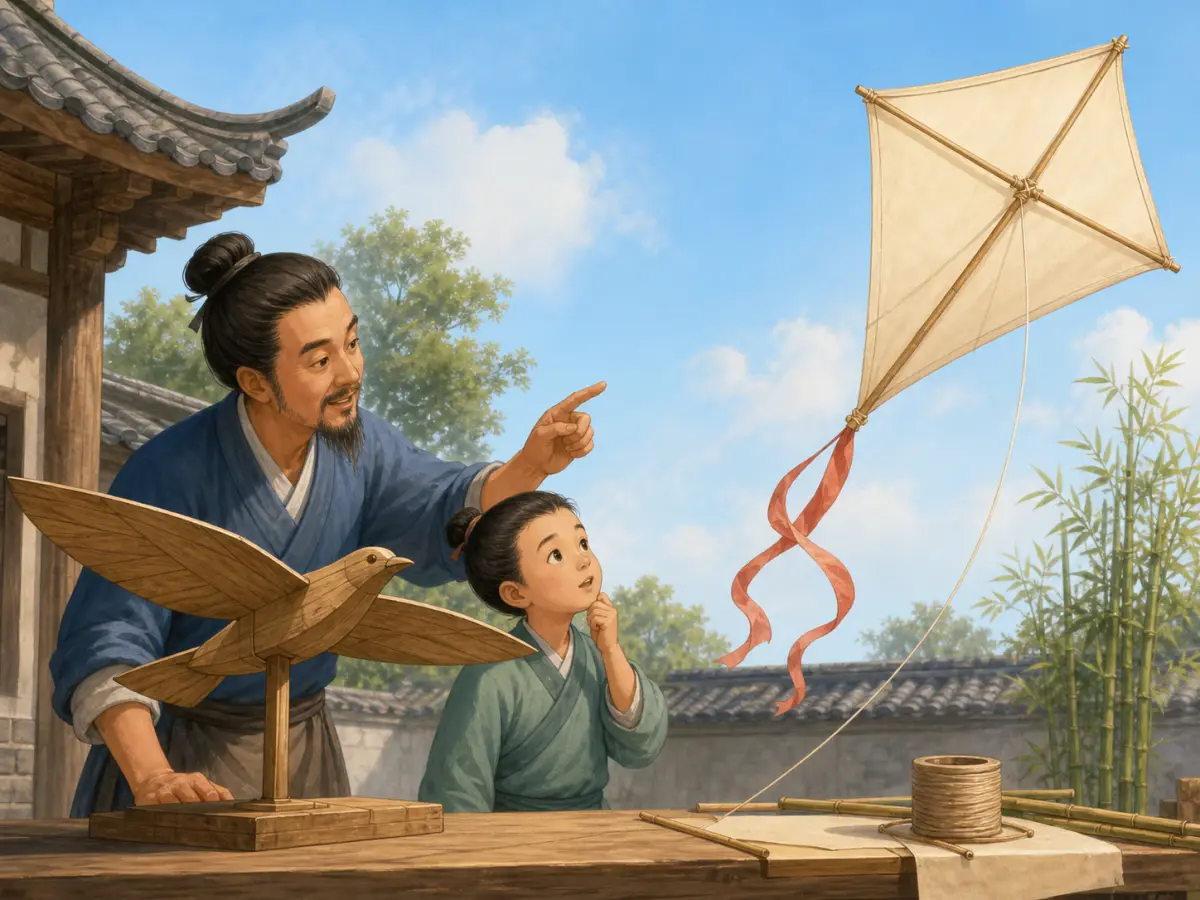
From wooden birds to bamboo-and-paper kites, they became lighter and better at flying.
风筝在中国出现得很早,常常被追溯到两千多年前。
据说最早和风筝有关的东西,是木头做的大鸟,叫"木鸢"。后来人们改用竹子和纸,轻多了,也更容易借风飞起来。
风筝最早的用途,可能不是玩具。汉朝的时候,将军韩信曾经用风筝来测量距离。他想挖一条地道进敌城,就放起风筝,根据线的长度算出从自己营地到城墙的距离。还有军队在风筝上绑竹哨,夜晚放飞到敌人上空。风穿过竹哨发出呜呜的声音,敌人以为天上有神明在警告他们。
Kites appeared very early in China. People often trace them back more than two thousand years.
According to old stories, one early kite-like object was a big wooden bird called a mu yuan. Later, people used bamboo and paper instead. Those materials were much lighter, so they were much better at catching the wind.
The first kites may not have been toys. In the Han dynasty, people said the general Han Xin used a kite to measure distance. He wanted to dig a tunnel into an enemy city, so he flew a kite and used the length of the string to figure out how far away the city wall was.
Some armies also tied bamboo whistles to kites and flew them over enemy camps at night. When the wind blew through the whistles, they made a long, ghostly sound. The enemies thought heaven was warning them.
Page 2
风筝为什么能飞?
Why Can a Kite Fly?
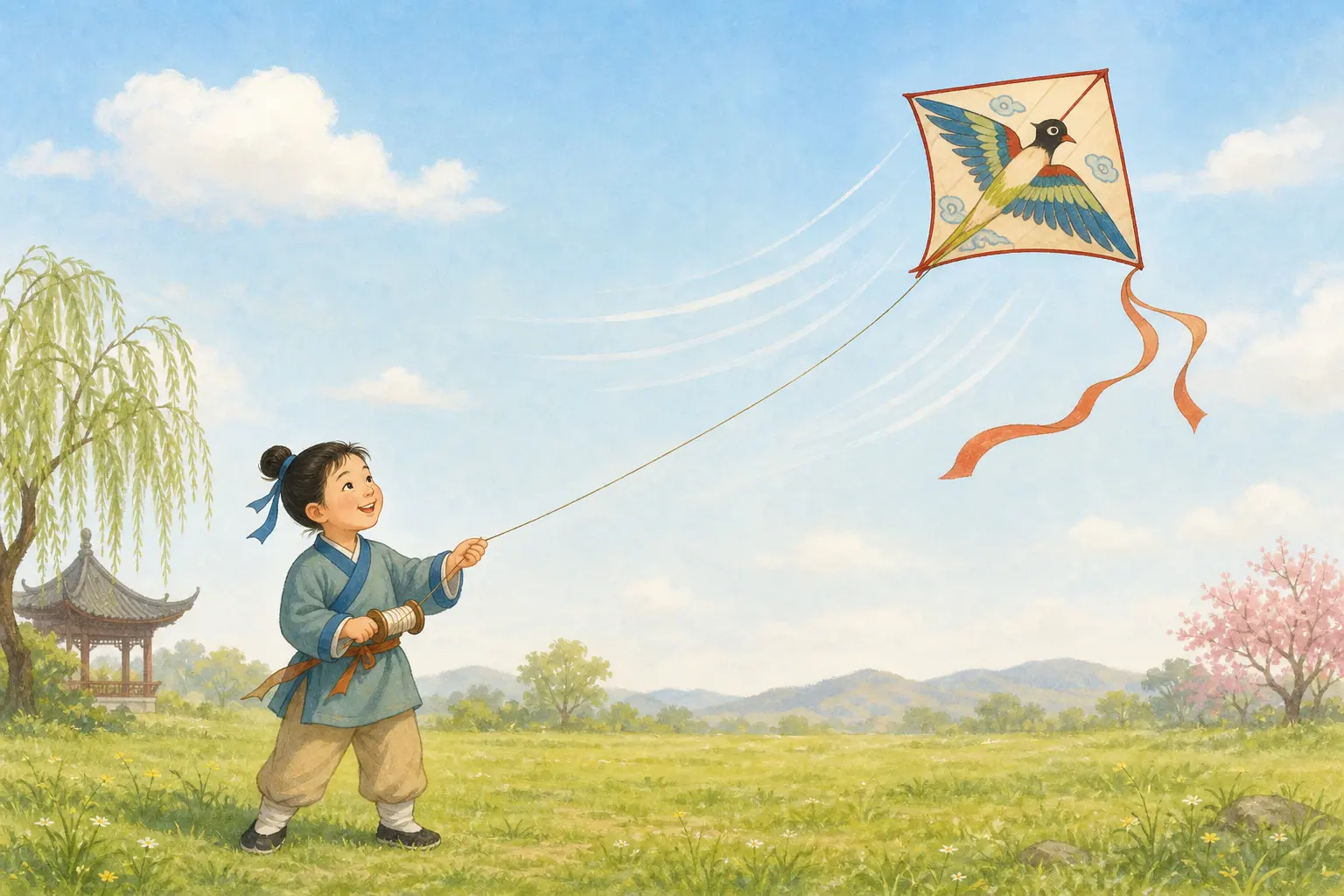
Wind pushes up. The string pulls down. Balance keeps the kite in the sky.
风筝能飞起来,是因为两样东西的合作:风和线。
你放风筝的时候,手拉着线,风筝斜对着风。风从风筝下面吹过,把风筝往上推。同时,你往回拉线,给风筝一个向下的力。风往上推,线往下拉,两个力平衡了,风筝就稳稳地停在了天上。
如果放了更多线,风筝就飞得更高。如果风突然停了,风筝就掉下来了。放风筝的过程,就是一直找平衡的过程。
A kite flies because two things work together: wind and string.
When you fly a kite, you hold the string, and the kite tilts into the wind. Air moves under the kite and pushes it up. At the same time, the string pulls down and back.
When those forces balance, the kite stays in the sky.
If you let out more string, the kite can fly higher. If the wind suddenly stops, the kite falls. Flying a kite is really about finding balance again and again.
Page 3
天上为什么有这么多形状?
Why Are There So Many Shapes?
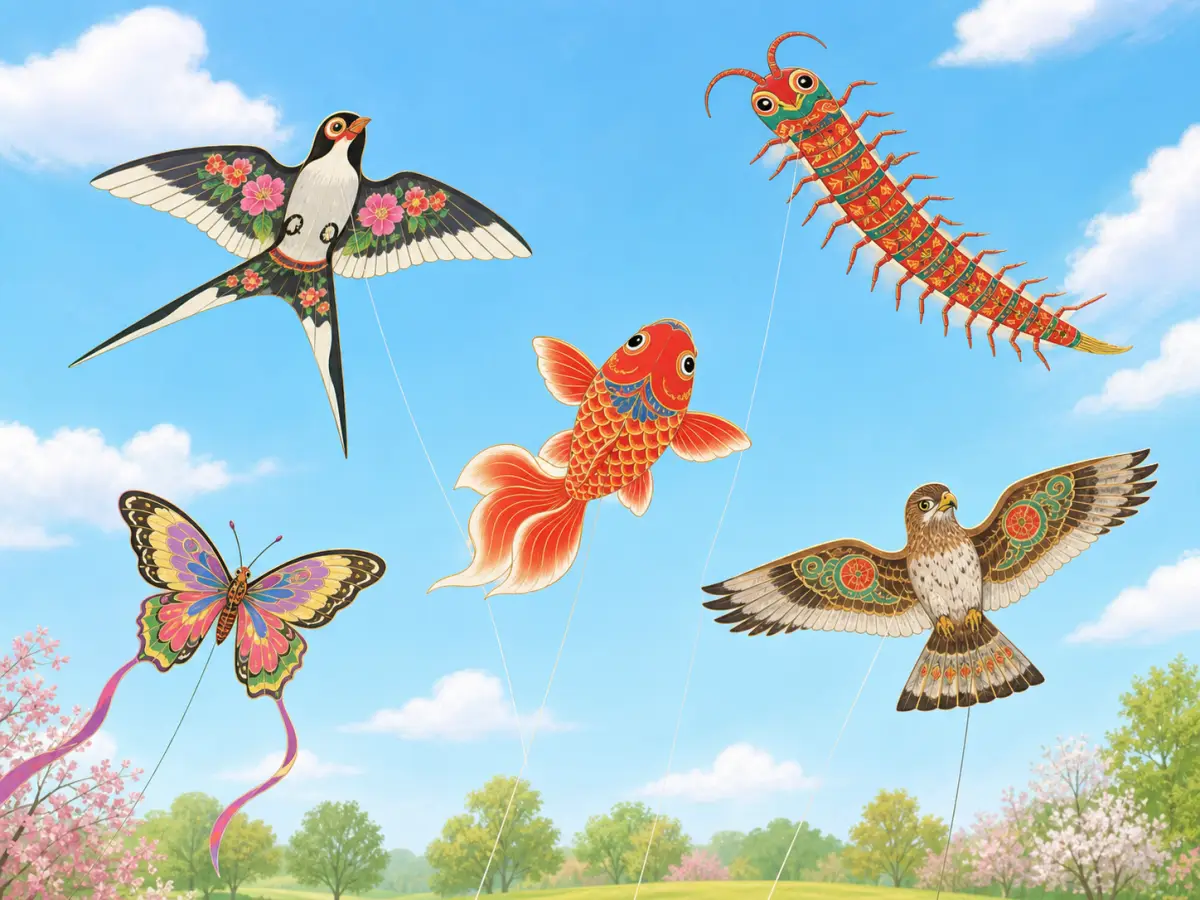
Swallows, centipedes, fish, eagles, and story heroes can all become kites.
中国的风筝,形状多得数不清。
最常见的燕子风筝,两只翅膀展开,尾巴像剪刀一样分叉。蜈蚣风筝由几十个小圆片连成一长串,在天上像一条游动的龙。老鹰风筝飞起来,真鸟看了都害怕。蝴蝶风筝、金鱼风筝、孙悟空风筝 - 你能想到的东西,几乎都有人做过风筝。
北方的风筝风格粗犷大气,个头往往很大;南方的风筝精细灵巧,上面的画工非常讲究。天津的"风筝魏"、北京的"哈氏风筝"、山东潍坊,都是中国有名的风筝产地。潍坊每年春天都要举办国际风筝节,全世界各地的风筝爱好者都来参加。
Chinese kites come in more shapes than anyone can count.
The swallow kite is one of the most common. Its wings spread wide, and its tail splits like scissors. A centipede kite is made from many small round pieces linked in a long chain. In the sky, it can look like a dragon swimming through the air.
Eagle kites can look so real that real birds may be nervous. Butterfly kites, goldfish kites, Monkey King kites - almost anything you can imagine has been made into a kite.
Kites from northern China often feel bold and large. Kites from southern China are often more delicate, with careful painting. Tianjin's Kite Wei, Beijing's Ha-style kites, and Weifang in Shandong are all famous kite traditions.
Every spring, Weifang holds an international kite festival. Kite lovers from around the world come to fly their creations there.
Page 4
不只是玩具 - 也和科学有关
Not Just a Toy: A Helper for Science

A kite can be a toy, and also an old helper for studying wind and flight.
风筝不止是一个玩具,它还为人类飞上天空做过贡献。
十九世纪末,美国莱特兄弟在研究飞机以前,确实做过不少和风筝、滑翔装置有关的试验。他们借这些东西去观察机翼和气流。这样看,风筝很像早期研究飞行时的一位老帮手。
风筝在中国传统文化里还有特别的意思。春天放风筝,人们喜欢在风筝上写下自己的烦恼和坏运气。风筝飞高了以后,剪断线,让它随风飘走,意思是把不好的东西全放走了。当然这是心理作用,烦恼不会真的跟着风筝飞走。但春天里,在草地上看着自己的风筝飘向蓝天,心里确实会轻松许多。
A kite is not just a toy. It also helped people think about flying.
In the late 1800s, before the Wright brothers built airplanes, they did many tests with kites and gliders. These tests helped them study wings and how air moves around them. In that way, the kite was an early helper in the study of flight.
In Chinese tradition, kites can also carry a special meaning. In spring, some people wrote their worries or bad luck on a kite. After the kite flew high, they cut the string and let it drift away. It meant, "Let the bad things go."
Of course, worries do not really fly away with a kite. But if you stand on spring grass and watch your kite rise into a blue sky, your heart really can feel lighter.
小结
Summary
风筝在中国历史上出现得很早。它最早可能和军事、测量有关,后来慢慢变成玩具、艺术和春天的快乐。下次你去公园放风筝的时候,别忘了,你手里牵着的是一个很老很老的点子。
Kites appeared early in Chinese history. At first, they may have been used for war and measuring distance. Later, they became toys, art, and part of springtime joy. The next time you fly a kite in the park, remember: the string in your hand is tied to a very old idea.