算盘:噼里啪啦的计算器
The Abacus: A Click-Clack Calculator
Page 1
一个木框,也能算很多数
A Wooden Frame Can Do a Lot of Math
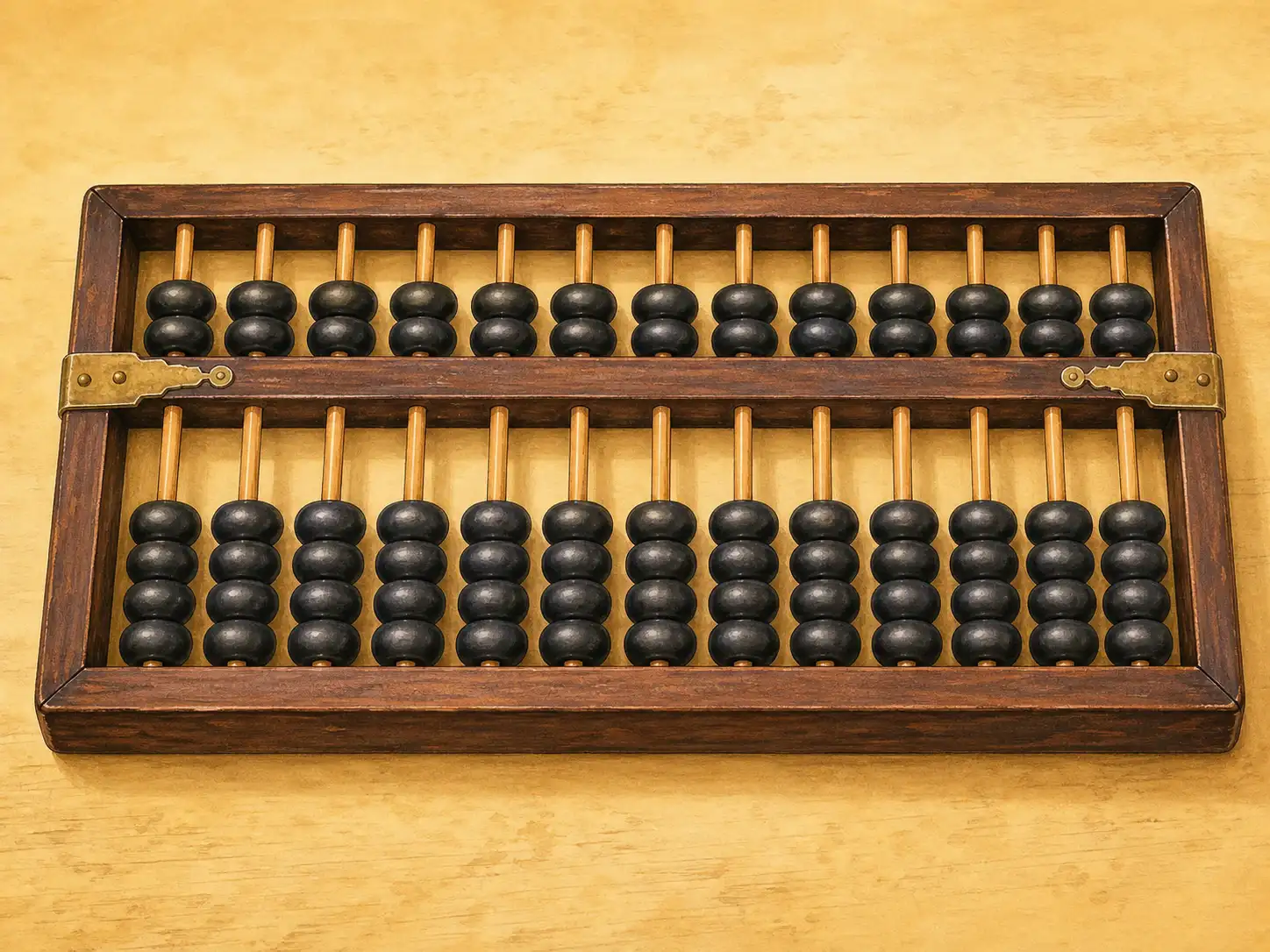
An abacus has a beam across the middle, with two beads above and five below. When a bead is pushed to the beam, it counts.
在电子计算器出现以前,很多中国人用算盘来算数。它是一个木框,里面有一根横梁和一串串珠子。
横梁把算盘分成上下两部分。下面的珠子常常一颗算一,上面的珠子常常一颗算五。珠子拨到横梁边上,就表示这个数正在被用。
算盘看起来不大,可是很有本事。会用的人只要拨动珠子,就能做加法、减法,后来还可以做更难的计算。
所以算盘像一台不用电的小计算器。数字看不见,可是一拨珠子,它们就好像跑到了你的手指前面。
Before electronic calculators existed, many people in China used the abacus for math. It was a wooden frame with a beam across the middle and rows of beads.
The beam split the abacus into two parts. The lower beads often counted as ones, and the upper beads often counted as fives. When a bead was pushed to the beam, it meant that value was being used.
An abacus did not look very big, but it could do a lot. If you knew how to use it, you could add, subtract, and later even do harder kinds of calculation.
So the abacus was like a little calculator that needed no electricity. You could not see numbers floating in the air, but once the beads moved, the numbers seemed to appear right under your fingers.
Page 2
学算盘,像唱歌一样
Learning It Was Almost Like Singing

Children learned by listening to number chants and moving the beads. An abacus lesson often had a strong rhythm.
很多孩子学算盘的时候,不只是看珠子,也会背口诀。老师念一句,学生跟一句,手指也跟着一起动。
这样学久了,数字和手指就会慢慢配合起来。看到一个数,珠子很快就知道该往哪边走。
所以算盘课有一种特别的节奏。你会听见啪嗒啪嗒的声音,好像一间教室在一起唱数字歌。
When many children learned the abacus, they did not only watch the beads. They also learned number chants. The teacher said a line, the students repeated it, and their fingers moved at the same time.
After enough practice, numbers and fingers began to work together. Once a student saw a number, the beads seemed to know where to go.
That gave abacus class a special rhythm. You could hear click-clack sounds all around the room, almost like a whole class singing a math song together.
Page 3
为什么它这么快?
Why Is It So Fast?
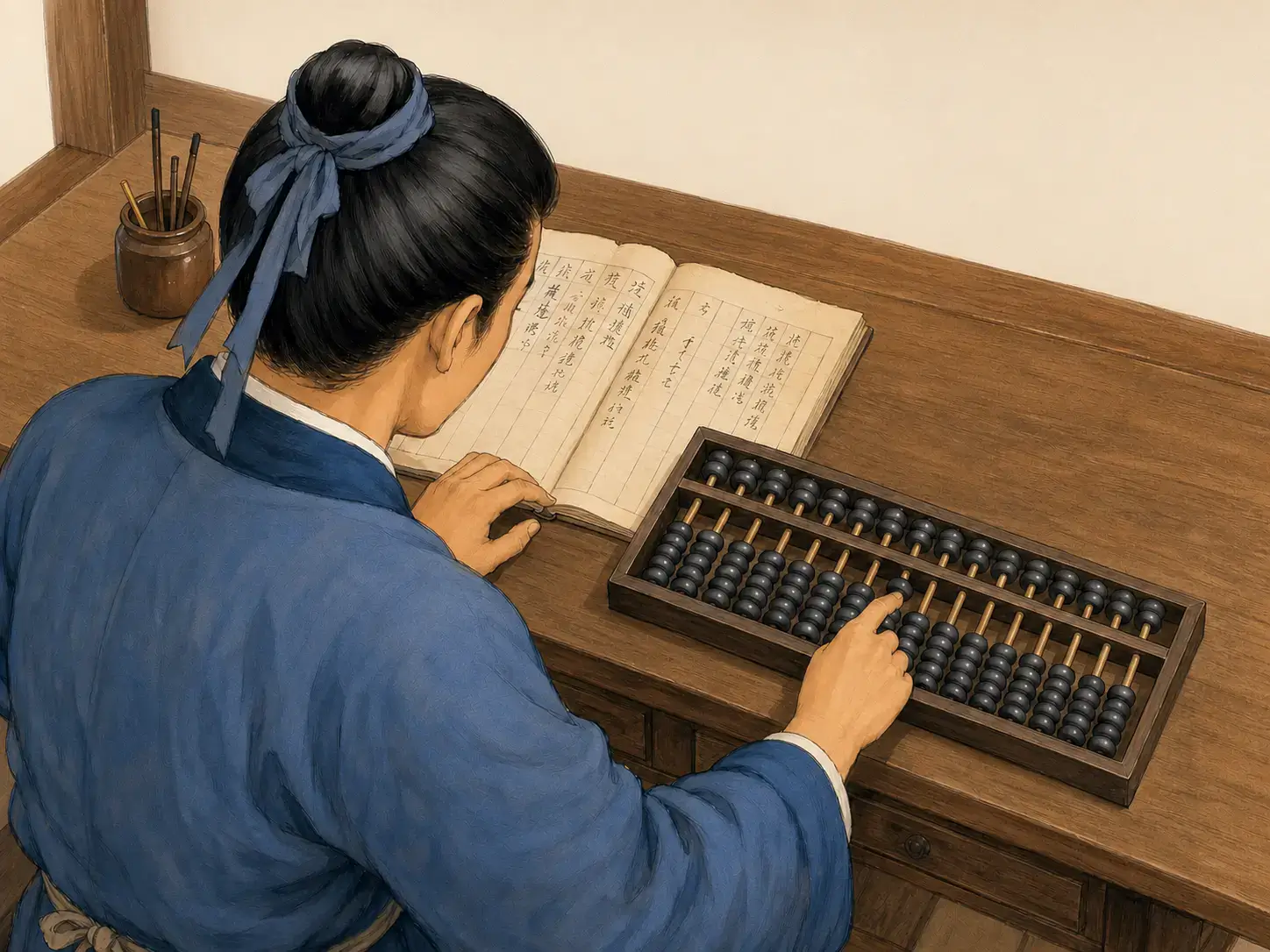
In shops and accounting rooms, skilled users often watched the ledger while moving the beads, fast and steady at the same time.
算盘厉害的地方,不只是会算,而是算得快。高手常常不用一直盯着算盘看,眼睛看着账本,手指已经先动起来了。
后来,算盘还传到了别的地方。日本人很喜欢它,也把它继续教给孩子。别的国家也做出了自己的样子。
可是不管样子怎么变,算盘的本领还是一样: 用一串串会响的珠子,把看不见的数字变得摸得到、看得见。
What made the abacus special was not only that it could calculate. It was that it could calculate quickly. Skilled users did not always stare at the frame. Their eyes could stay on the ledger while their fingers moved first.
Later, the abacus traveled to other places too. People in Japan liked it and kept teaching it to children. Other countries made their own versions as well.
But however the shape changed, the abacus kept the same gift: it turned invisible numbers into something you could touch, see, and hear.
会响的数学
Math You Can Hear
算盘像一台不用电的老计算器,可它不只是工具,也是一种手、眼、脑一起合作的本领。
当珠子啪嗒一响,数字好像也跟着跳出来了。
The abacus was like an old calculator that needed no electricity, but it was more than a tool. It was a skill that brought hands, eyes, and mind together.
When the beads clicked into place, the numbers seemed to jump out too.