一只漏馅的饺子
The Dumpling That Wouldn't Stay Closed
阅读难度 · 中等Reading level · Medium
Page 1
它为什么在锅里“张嘴”?
Why Did It Open in the Pot?
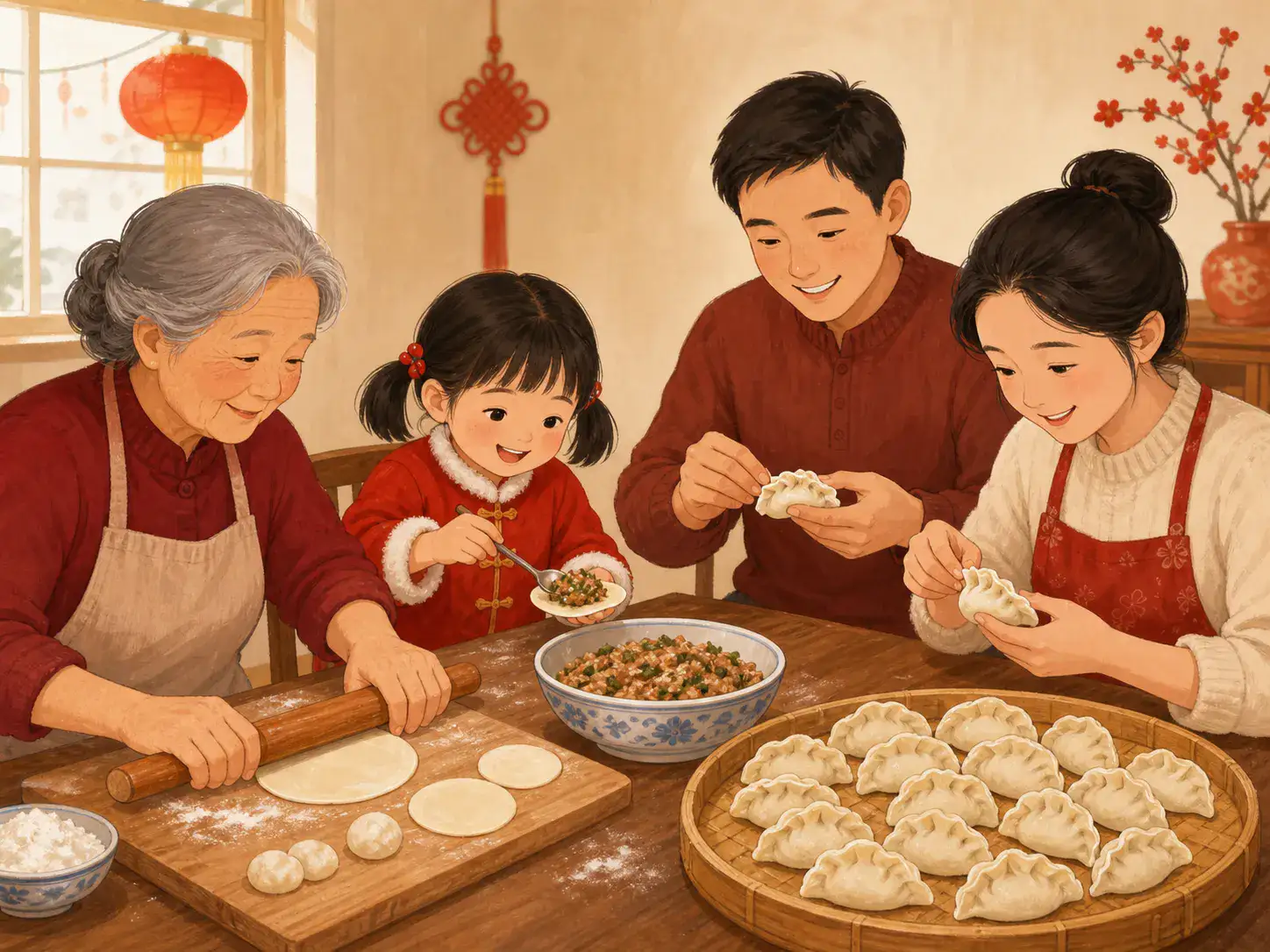
A modern illustration of a family making dumplings. Some roll wrappers, some add filling, and others learn how to seal the edges.
一锅水刚刚滚起来,一只饺子忽然在水里“张开嘴”,绿色的菜馅从裂缝里游了出来。孩子赶紧捞起下一只检查:同样的皮,同样的馅,为什么别人的安安稳稳,自己包的总是漏?
一家人把它当成一个小谜题。也许馅放得太多,皮被撑开了;也许菜馅太湿,汁水沾在边上,面皮就粘不牢;也许封口时留了一点空气,饺子受热以后鼓起来;也可能只是有一小段没有捏紧。于是孩子少放一勺馅,擦干皮边,从中间向两旁慢慢按紧。下一只下锅后翻了几个跟头,终于没有“张嘴”。
这就是饺子最基本的办法:用面皮把馅包住,再煮、蒸或煎熟。馅可以有猪肉白菜、羊肉胡萝卜、鸡蛋韭菜、虾或各种蔬菜;皮也不一定都折出同样的褶。不同家庭会有不同做法,厨房里没有一个全中国统一的“唯一正确手势”。
The water has just begun to boil when one dumpling suddenly opens its “mouth.” Bits of green filling swim out through the split. A child checks the next dumpling: same wrapper, same filling - so why do the others stay closed while mine always leak?
The family turns the problem into a small investigation. Perhaps there is too much filling and the wrapper is stretched tight. Perhaps wet filling has touched the rim, so the dough cannot stick. Maybe air was trapped inside and expanded as it heated. Or perhaps one tiny part of the edge was never pressed shut. The child tries again: a little less filling, a clean rim, and a firm seal from the center out. The next dumpling tumbles through the water and stays closed.
That is the basic dumpling idea: enclose a filling in a wrapper, then boil, steam, or pan-fry it. Fillings might include pork and napa cabbage, lamb and carrot, egg and Chinese chives, shrimp, or many kinds of vegetables. The folds can differ too. Families have their own methods; there is no single hand motion that all of China must follow.
Page 2
地下的实物,书里的名字
Food Underground, Names in Old Books

A modern imagined scene from the folk tale of Zhang Zhongjing making “jiao'er.” It is not a record of a historical event or medical advice.
这只漏馅的饺子也带来一个更难的问题:人们是什么时候开始这样包面食的?考古学家在新疆吐鲁番附近的阿斯塔那古墓群里,发现过唐代墓葬中保存下来的弯月形面食。唐朝大约从公元七世纪延续到十世纪;吐鲁番在中国西北部,气候干燥,许多食物才有机会保存一千多年。这些实物告诉我们,当时当地的人已经会做很像今天饺子的食物。但是,一处墓葬里的食物不能独自回答“第一只饺子是谁包的”,也不能证明今天所有饺子都从同一份配方直接传来。
老书里的名字也会移动。不同年代和地区的人曾用“馄饨”“角子”“角儿”“扁食”等词来称呼包馅面食;同一个词在不同地方,可能指今天的饺子,也可能指馄饨或另一种点心。后来“饺子”才逐渐成为普通话里更通行的名称。所以,看见一个古老名字,不能马上把它等同于今天超市冷冻袋里的那一种。
另一个有名的说法讲到东汉医生张仲景。民间故事说,他看见人们冬天受冻,便把羊肉等材料包进耳朵形的面皮,做成“娇耳”分给大家。张仲景是真实的古代医学家,但现有证据不能证明他发明了饺子,“娇耳治冻耳”也属于后来流传的故事。它可以告诉我们后人怎样把热食、冬天和关怀连在一起,却不能当作确切的发明记录,更不能拿来代替今天的防寒或就医。
The leaky dumpling leads to a harder question: when did people begin wrapping food this way? Archaeologists found crescent-shaped wheat foods in Tang-dynasty tombs at Astana, near Turpan in northwestern China. The Tang dynasty lasted roughly from the seventh through the early tenth century. Turpan's very dry climate helped some foods survive for more than a thousand years. These objects show that people there made foods much like today's dumplings. But food from one burial site cannot identify the cook of the “first dumpling,” and it cannot prove that every modern dumpling descends from one unchanged recipe.
Names move through history too. At different times and in different regions, words such as huntun, jiaozi written with a character meaning “corner,” and bianshi were used for stuffed dough foods. The same old word might mean something close to a modern jiaozi in one place and a wonton or another snack somewhere else. The modern word jiaozi became widely used later. An old name, therefore, is not a perfect label for the frozen dumplings in a supermarket today.
One famous account concerns Zhang Zhongjing, a real physician who lived during the Eastern Han dynasty. In a later folk tale, he wraps lamb and other ingredients in ear-shaped dough parcels called jiao'er and gives them to people suffering in winter. Existing evidence does not show that Zhang invented dumplings, and the tale of curing frozen ears is not a medical record. The story can show how later generations connected hot food, winter, and care - but it should never replace warm clothing or medical help.
Page 3
谁在什么时候吃饺子?
Who Eats Dumplings, and When?
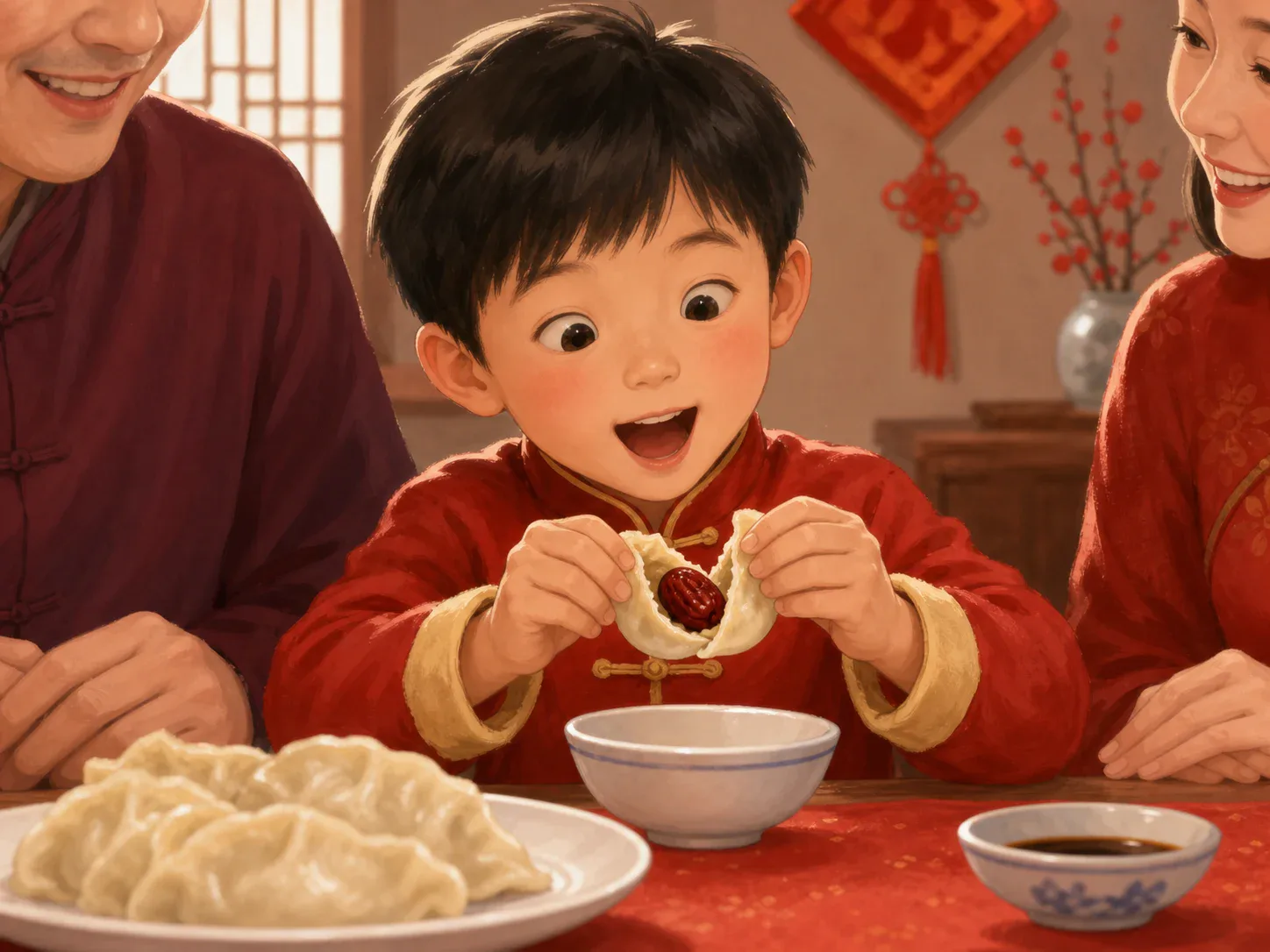
A modern illustration of a child finding a red date. Coins, whole nuts, and hard candy should not be hidden in children's food; a visible mark on the outside is a safer game.
在中国北方的许多家庭,饺子既是平常的一顿饭,也会在春节或冬至上桌。有人把弯弯的饺子看成古代的金银元宝,借它表达新年富足的愿望;也有人喜欢“饺子”和“交子”声音相近,把它解释成新旧年在子时相交。不过,语言学研究提醒我们,“更岁交子”更像后人根据字音编出的吉祥说法,不是已经证实的名字起源。
更不能把一种北方年俗说成所有中国家庭的规矩。北方各地吃饺子的时刻和做法本来就不完全一样;在许多南方家庭,年糕、汤圆、粽子、鱼或当地菜肴可能更能代表年味。人口流动和速冻食品又让习惯不断变化。一个广州家庭可以爱吃饺子,一个北京家庭也不必每个节日都包。文化不是一张人人照着做的菜单。
有些家庭过去会在一只饺子里放硬币、整颗花生、红枣或糖,找到的人就被祝福“有好运”。祝福是一种游戏和心意,不是对未来的保证;更重要的是,硬币和硬糖可能卡住喉咙,坚果还可能带来过敏风险,不适合暗藏在儿童食物里。想保留惊喜,可以让大人在一只饺子外面用食用色面团做一个看得见的小点,或者把“幸运卡”放在盘子下面。先说清楚所有配料,坐好、慢慢吃,才是真正值得庆祝的好运。
In many northern Chinese families, jiaozi can be an ordinary meal as well as food for Lunar New Year or the Winter Solstice. Some people see the curved shape as an old gold or silver ingot and use it to express a wish for plenty in the coming year. Others connect the sound of jiaozi with words about the old year meeting the new at midnight. Linguists caution that this second explanation is probably a later piece of lucky wordplay, not a proven origin of the food's name.
One northern custom should not become a rule for every Chinese family. Even within northern China, families eat dumplings at different times and prepare them in different ways. In many southern homes, rice cakes, sweet rice balls, fish, zongzi, or local dishes may feel more like New Year food. Migration and frozen foods keep changing habits as well. A family in Guangzhou may love jiaozi, while a family in Beijing does not have to make them for every festival. Culture is not one menu that everyone follows.
Some families have hidden a coin, whole peanut, red date, or candy in one dumpling and wished good luck to whoever found it. The wish is a playful blessing, not a prediction. More importantly, coins and hard candy can cause choking, and nuts can also pose choking and allergy risks. They should not be hidden in food for children. For a safer surprise, an adult can put a clearly visible dot of colored food dough on the outside of one dumpling or place a “lucky card” under a plate. Tell everyone the ingredients, sit down, and eat slowly - that is a much better kind of luck.
Page 4
世界为什么到处有“皮包馅”?
Why Does the World Have So Many Filled Wrappers?
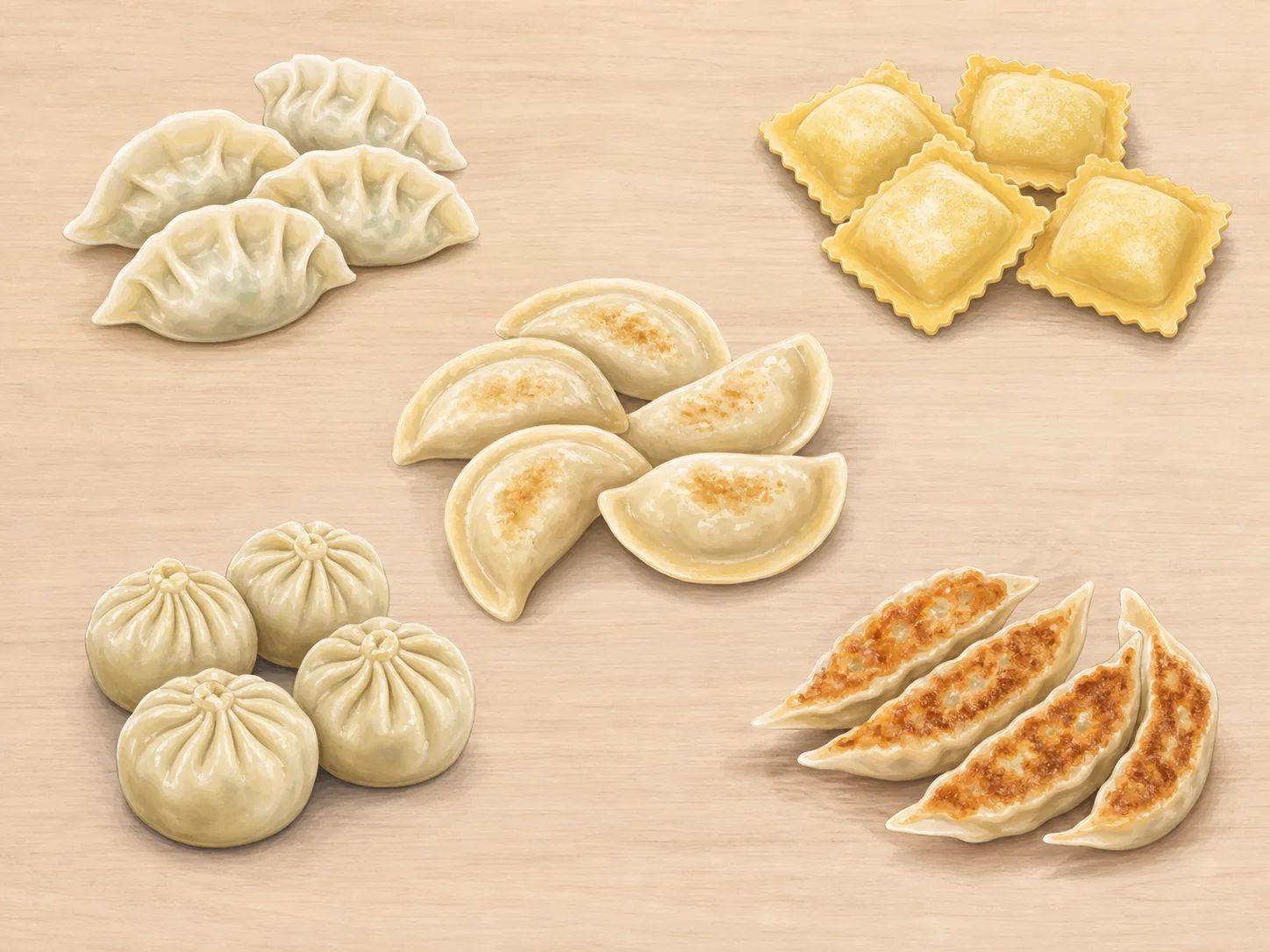
A modern concept image. Filled-dough foods have local names, shapes, and ways of eating; a similar shape does not prove a single ancestor.
把馅包进面团的办法在欧亚大陆许多地方都能见到:中国有饺子和馄饨,韩国有 mandu,日本有 gyoza,中亚和土耳其等地有 manti,意大利有 ravioli,波兰有 pierogi。它们使用的面粉、馅料、大小、折法和烹调方式并不一样。“Dumpling”是英语里的一个大篮子,放在这个篮子里的食物,并不因此变成同一道菜。
这些食物为什么相似?人会旅行,食谱也会跟着商人、移民和邻居移动;有些名称和做法确实留下了交流的线索。另一方面,只要一个地方有面粉、馅料和火,厨师也可能自己想到“包起来再煮”的办法。研究者还不能为世界上所有包馅面食画出一棵确定的家谱。相似可以提醒我们寻找交流,却不能证明马可·波罗或任何一个旅行者把所有面食从一端带到了另一端。
Filled dough appears across much of Eurasia: China has jiaozi and wontons, Korea has mandu, Japan has gyoza, Central Asia and Turkey have forms of manti, Italy has ravioli, and Poland has pierogi. Their grains, fillings, sizes, folds, and cooking methods are not the same. The English word dumpling is a large basket. Foods placed in that basket do not suddenly become one dish.
Why are some of them similar? People travel, and recipes move with merchants, migrants, and neighbors. Some names and techniques do preserve clues of exchange. Yet cooks who have flour, filling, and heat might also discover for themselves that wrapping food is useful. Researchers still cannot draw one certain family tree for every filled-dough food in the world. Resemblance can make us look for connections, but it does not prove that Marco Polo - or any single traveler - carried all pasta from one end of Eurasia to the other.
从裂缝里学到的事
What the Crack Taught Us
锅里的那只饺子终于不再漏了,但它留下的问题比馅还多:面皮为什么能封住?古墓里的食物能证明什么?一个名字怎样改变?一个地方的年俗为什么不能代表所有人?
下次包饺子时,你可以少放一点馅,把边认真按紧,也可以问问同桌的人:你家的馅是什么?什么时候吃?叫什么?真正有意思的,不是替全世界找出一只“最早的饺子”,而是看见许多家庭怎样把一张面皮,包成自己的味道和记忆。
The dumpling in the pot finally stays closed, but its crack has released more questions than filling. Why does dough seal? What can preserved food in a tomb prove? How do names change? Why can't one region's holiday custom represent everyone?
The next time you make jiaozi, try a little less filling and press the edge carefully. Then ask the people at your table: What goes into your family's version? When do you eat it? What do you call it? The most interesting search is not for one “first dumpling” that owns every other one. It is seeing how many families have folded a wrapper around their own tastes and memories.