衣柜里哪一件才算汉服?
Which Clothes in the Closet Count as Hanfu?
阅读难度 · 困难Reading level · Hard
Page 1
看见交领右衽,就找到答案了吗?
Does a Crossed Collar Give Us the Answer?
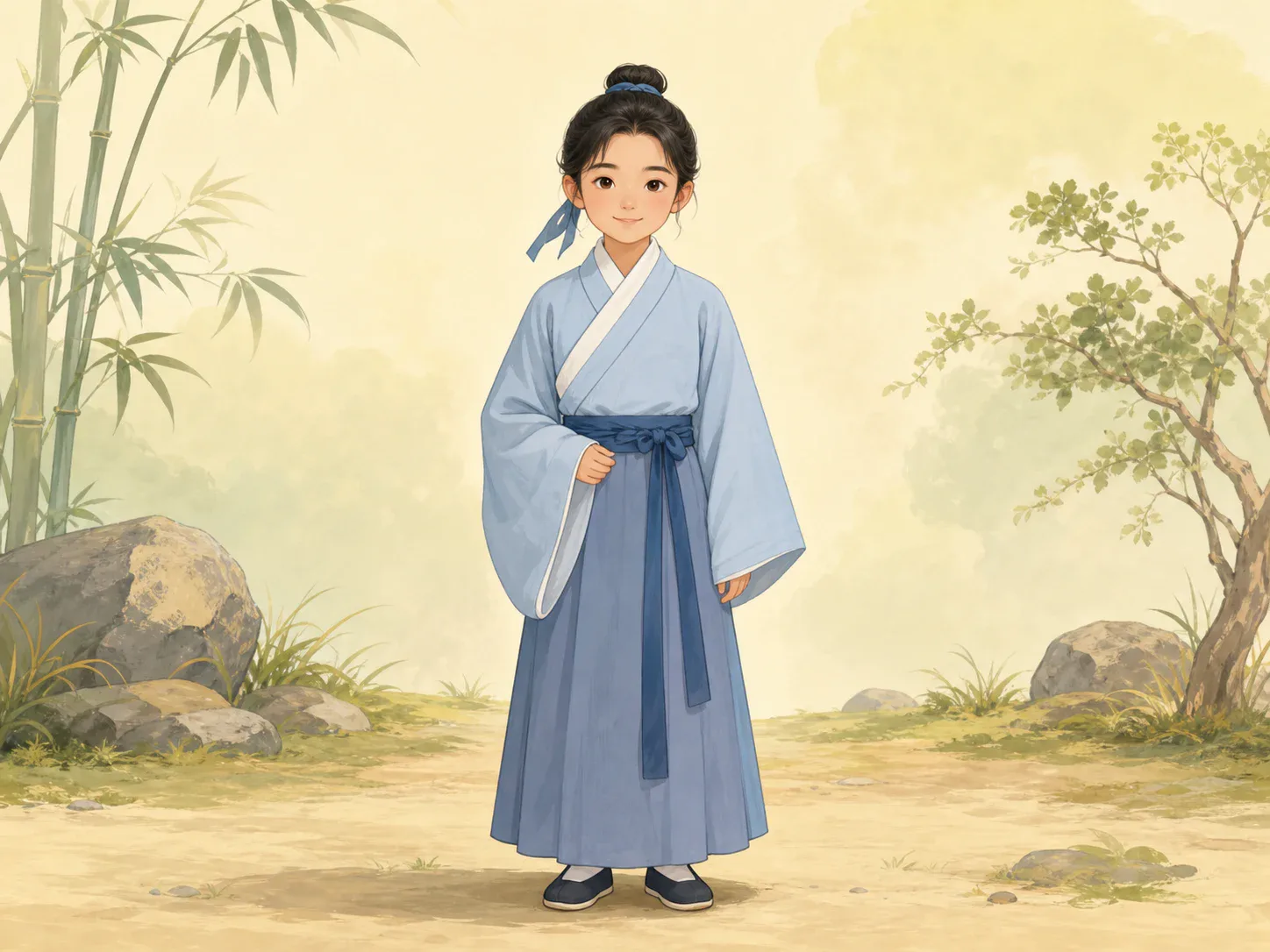
This is a modern design with a crossed collar closing to the right, not an exact reconstruction of an excavated garment. A collar is a clue, but it cannot identify a dynasty, wearer, or purpose by itself.
想象一间很大的衣柜:里面有交领长袍、圆领袍、短上衣、长裙、裤子、窄袖骑装,还有今天设计师做的新衣。柜门上只写着“汉服”。现在请你挑出“真正的汉服” - 你会先看哪里?很多人会指向图中斜斜相交、向穿衣者右边合拢的衣襟,也就是“交领右衽”。它的确是中国古代许多服装中长期存在的做法,却不是一张万能身份证。
今天人们所说的“汉服”,通常指现代复兴者根据不同时代的汉族服饰资料,重新整理、复原或设计出来的一大类衣服。古文里早就能见到“汉服”两个字,但它在不同语境中可能只是“汉人的服装”或“汉朝的服装”;今天这种跨越许多朝代、带着明确文化身份的总称和分类,是近几十年才形成的。
所以,汉朝人并不会每天打开衣柜说:“我今天穿哪一款汉服?”他们会按照当时的性别、身份、工作、场合、地区和流行来叫一件具体衣服。研究者今天要把织物残片、墓葬出土的衣服、绘画、陶俑、文字制度和账目放在一起比较。每种证据都缺一角:布会腐烂,颜色会褪去,画中人可能是理想形象,法令写的也不一定人人照做。
Imagine a huge closet holding crossed-collar robes, round-collar robes, short jackets, long skirts, trousers, narrow riding clothes, and new designs made today. The door has only one label: hanfu. Now choose the “real” hanfu. Where would you look first? Many people would point to the diagonal front in the picture, which closes toward the wearer's right. This is called a crossed collar with right closure. It appeared in many kinds of clothing over a long time, but it is not a magic identity card.
Today, hanfu usually means a broad family of clothes that revival participants have organized, reconstructed, or designed using evidence about Han Chinese dress from different historical periods. The two Chinese characters in the word appeared in older texts, but they could simply mean “the clothing of Han people” or “dress of the Han dynasty” in a particular passage. The current umbrella category, carrying a clear cultural identity across many dynasties, took shape only in recent decades.
People in the Han dynasty did not open a closet each morning and ask, “Which style of hanfu should I wear today?” They used the names of garments in their own time and dressed according to gender, position, work, occasion, region, and fashion. Researchers now compare surviving textile pieces, excavated clothes, paintings, tomb figures, written rules, and household records. Every kind of evidence has a missing corner: cloth decays, colors fade, art may show an ideal figure, and a rulebook cannot prove that everybody followed the rule.
Page 2
同一个衣柜里,为什么会有这么多形状?
Why Does One Closet Hold So Many Shapes?
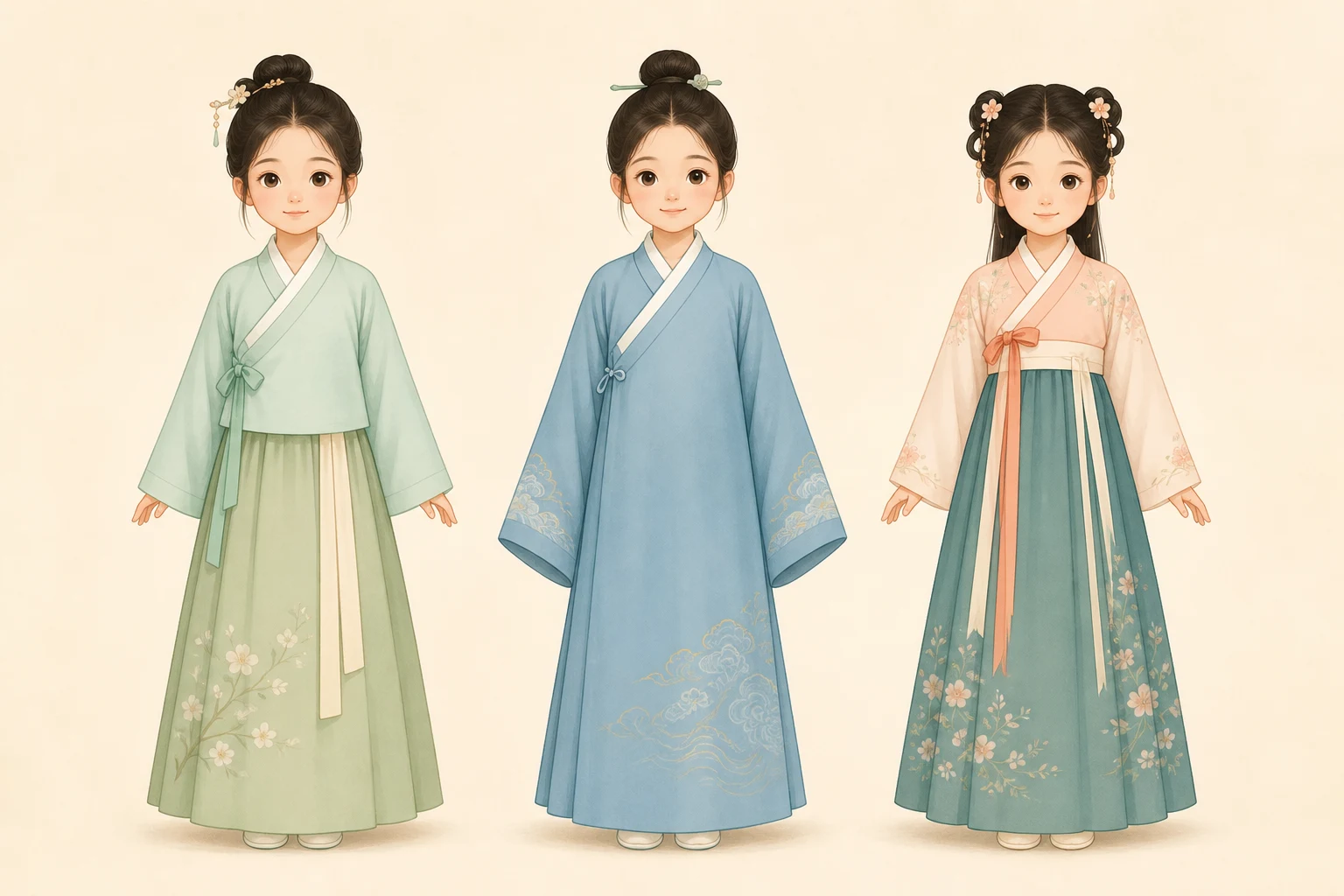
These are three modern creations using historical elements such as crossed collars, long robes, and jackets with skirts. They lack the evidence needed to label them as three exact dynasties or ancient garments.
交领右衽很常见,但古代衣柜里从来不只有它。长袍可以是交领,也可以是圆领;有人上衣配裙,有人袍内穿裤;袖子有宽有窄,衣摆、腰带、帽子和鞋也不断改变。同一种名称到了另一个朝代,剪裁可能已经不同;同一时代里,皇宫、城市、乡村和边地的穿法也不会完全一致。因此,不能把“汉服”想成一套穿了几千年、只换颜色的校服。
衣服还会跟着人和技术旅行。A powerful and creative time in China about 1,300 years ago.长安连接着草原、中亚和更远的市场,圆领、窄袖、长靴和适合骑马活动的样式广受欢迎。它们经过本地裁缝改制,又进入礼服、官服和日常服装,后来还影响邻近地区。说它们“纯粹来自中原”会漏掉交流,说它们只是“外来服装”也会抹掉几代人的重新制作。文化交流不是把一滴别的颜色掉进一杯纯水,而更像许多织线早已在布上交叉。
这种交流也提醒我们尊重今天各民族自己的服饰名称。满族、藏族、维吾尔族、苗族等群体都有各自复杂而仍在发展的服装传统,不能因为它们出现在中国历史里,就全部塞进“汉服”;也不能因为一件汉族服装吸收过别处的领形、图案或技术,就把它从历史中赶出去。分类是帮助我们提问的工具,不是宣布谁“纯”谁“不纯”的门卫。
Crossed collars with right closure were common, but ancient closets held much more. A robe might have a crossed collar or a round one. Someone might wear a jacket with a skirt, while someone else wore trousers beneath a robe. Sleeves could be wide or narrow, and hems, belts, hats, and shoes kept changing. A garment name might refer to a different cut in another dynasty. Even in the same period, people at court, in cities, in villages, and near frontiers did not all dress alike. Hanfu was never one school uniform worn for thousands of years in changing colors.
Clothes also traveled with people and technology. During the A powerful and creative time in China about 1,300 years ago., Chang'an was connected with grasslands, Central Asia, and more distant markets. Round collars, narrow sleeves, tall boots, and clothes suited to riding became widely popular. Local tailors remade these forms, which entered ceremonial, official, and daily dress and later influenced neighboring regions. Calling them “purely Central Plains clothing” erases exchange. Calling them only “foreign clothes” erases generations of local work. Cultural contact is not one drop spoiling a glass of pure water. It is more like many threads that have already crossed inside the cloth.
That history also reminds us to respect the clothing names used by different communities today. Manchu, Tibetan, Uyghur, Miao, and other peoples have complex, living dress traditions of their own. They should not all be stuffed into the category of hanfu simply because they belong to China's history. At the same time, a Han Chinese garment does not stop belonging to its history because it adopted a collar, pattern, or technique from somewhere else. Categories should help us ask questions, not guard a gate of imagined “purity.”
Page 3
一只大袖子,能认出谁在穿吗?
Can a Wide Sleeve Tell Us Who Wore It?
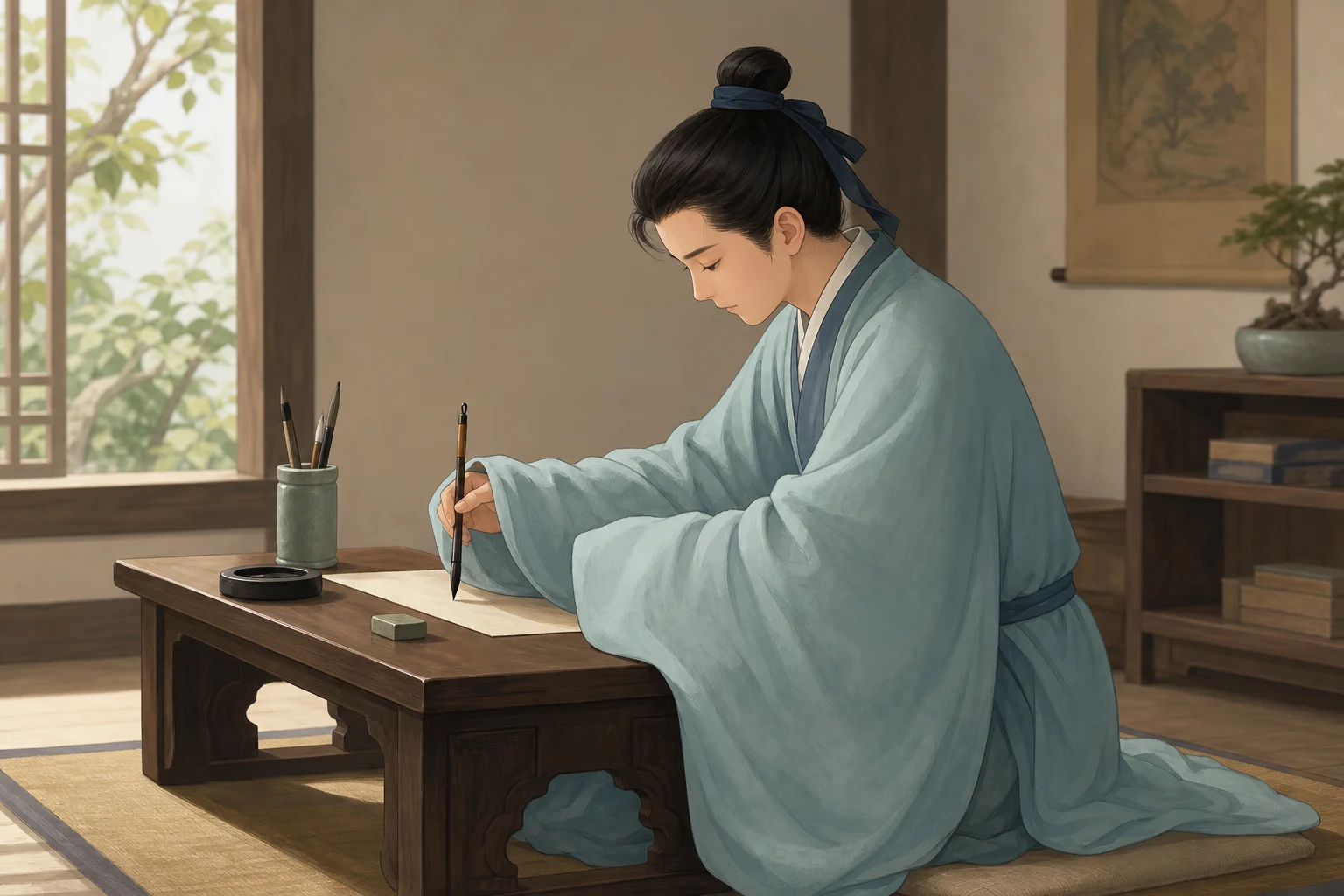
This is a modern imagined writing scene. Wide sleeves may suggest some ceremonial or scholarly styles, but they cannot prove the figure's dynasty, rank, or occupation.
宽大的袖子能制造安静、庄重的感觉,所以电影和插画常让读书人穿着它写字。可真实生活不肯这样整齐。参加典礼的人可能换上层层礼服,回到家便穿得轻便;官员有规定的冠帽、颜色、材料和配饰,农民、工匠、士兵和骑手也会选择方便劳动与行动的衣服。穷人和富人即使穿着相似形状,布料、染色、补丁和数量也可能完全不同。
历代政府曾用服装制度表示等级、官职、性别和仪式身份,好像给社会写下一份“应该怎样穿”的说明书。然而说明书不等于街头实况。唐代法律会处罚穿错品级颜色的人,正说明现实中有人越过规定;一件十九世纪清代朝服按制度只有皇帝和皇太子能用五爪龙,可博物馆研究也发现,后来这些规定并不总被严格遵守。商业、模仿、旧衣流通和个人喜好都会让边界移动。
因此,服装确实能提供身份线索,却要和出土地点、墓志、题记、年代测定及其他物件一起读。一个人穿圆领袍,不等于他一定来自中亚;一个人穿宽袖,也不等于他一定是文人。更不能拿一幅今天画的“古风人物”,反过来证明历史人物真实穿过什么。衣服像证词,不是完整判决书。
Wide sleeves can create a calm, dignified feeling, so movies and illustrations often give them to scholars who are writing. Real life was less tidy. A person might put on layered ceremonial dress for a formal event and change into something easier at home. Officials had regulated hats, colors, fabrics, and ornaments. Farmers, craftspeople, soldiers, and riders needed clothing that worked with their tasks. Even when rich and poor people wore a similar shape, the fabric, dye, patches, and number of garments could be completely different.
Governments in different dynasties used dress rules to display rank, office, gender, and ritual role. It was as if the state wrote an instruction book for how society ought to look. But an instruction book is not a street photograph. Tang law punished people for wearing colors above their rank - which also tells us that some people did it. On one nineteenth-century Qing court robe, five-clawed dragons were officially reserved for the emperor and heir, yet museum research notes that this rule was often overlooked later. Trade, imitation, secondhand clothing, and personal taste could all move the boundaries.
Clothing can offer evidence about identity, but it must be read beside excavation location, inscriptions, dates, and other objects. A round-collar robe does not prove that its wearer came from Central Asia. A wide sleeve does not prove that its wearer was a scholar. And a modern “ancient-style” picture certainly cannot prove what a real historical person wore. Clothing is testimony, not the whole verdict.
Page 4
清朝以后,旧衣服是不是一下子全消失了?
Did Older Clothing Vanish as Soon as the Qing Began?
1644年,满族建立China's last imperial dynasty, from 1644 to 1912.。早期清廷把发式和服装当作服从新政权的标记,尤其强迫许多男性臣民剃去前额头发、留辫,并改变官场和公共生活中的服装。这些命令遭到强烈抵抗,也带来暴力。可是把此后两百多年总结成“所有汉族人立刻脱掉汉服,从此只穿同一套满族衣服”,仍然太简单。
政策会因性别、身份、场合和地区而不同。男性官员的正式服装更受清廷制度约束;许多汉族女性保留了上衣配裙或裤等较有连续性的穿法,满族女性也有自己的长袍、发式与鞋。不过,汉族女性的衣服并没有冻在明朝最后一天,满族服饰也不是永远不变。城市风尚、婚姻、市场和彼此模仿,让剪裁、镶边、袖口与装饰不断混合和更新。
清代朝服本身也不是“把中国元素全部换掉”。骑射传统影响了窄袖、开衩、靴裤和马蹄袖等设计,礼服又结合了更早的龙纹、裙褶和帝国礼制。有人把衣着当作政治忠诚的标记,有人遵守制度,有人追逐时尚,还有人只是穿得起手边的衣服。历史变化有强迫,也有适应和创造;只有把这些力量同时看见,才不会让一件衣服替几亿人说同一句话。
In 1644, the Manchus established the China's last imperial dynasty, from 1644 to 1912.. The early Qing court made hairstyle and clothing into signs of submission to the new government. In particular, it forced many male subjects to shave the front of the head, wear a queue, and change official and public dress. These orders met fierce resistance and brought violence. Even so, it is too simple to summarize the next 250 years by saying, “Every Han person instantly removed hanfu and wore one identical Manchu outfit forever.”
Rules differed by gender, status, occasion, and region. Male officials' formal clothing was more tightly shaped by Qing court regulations. Many Han women continued wearing jackets with skirts or trousers, while Manchu women had distinctive robes, hairstyles, and shoes. Yet Han women's dress did not freeze on the final day of the Ming, and Manchu clothing did not stay unchanged. City fashions, marriage, markets, and mutual imitation kept altering cuts, borders, cuffs, and decoration.
Qing court dress was not made by replacing every earlier Chinese element. Riding traditions helped shape narrow sleeves, slits, boots, trousers, and horse-hoof cuffs, while formal robes also incorporated older dragon designs, pleated skirts, and imperial ritual ideas. Some people treated dress as a mark of political loyalty. Some followed rules, some chased fashion, and some simply wore what they could obtain. Historical change included force, adaptation, and creativity. We need to see all three before asking one garment to speak for hundreds of millions of people.
Page 5
今天穿汉服,是复原历史还是创造新时尚?
Is Hanfu Today Reconstruction or New Fashion?
当代汉服复兴在二十一世纪初从网络讨论和公开穿着中迅速发展,2003年常被看作一个重要起点。有人查墓葬报告和博物馆藏品,尽量复原某个年代的布料、剪裁与穿法;有人喜欢穿改良汉服上学、上班或旅行;也有人为节日、婚礼、摄影、舞台或游戏角色搭配服装。运动鞋、拉链、化纤面料和现代审美也会进入衣柜。
参与者的理由同样多样:衣服好看,做手工有趣,想和家族或文化历史建立联系,想在全球时尚中表达中国身份,或只是喜欢与朋友一起拍照。商店、设计师、工厂、短视频平台、景区和摄影服务把兴趣变成了巨大市场;这既让汉服更容易买到,也会奖励最上镜、最容易销售的样式。现代汉服因此既在研究过去,也在创造今天。
争议也不会消失。人们会争论哪种形制“够不够正确”、能不能混搭、汉服应当代表汉族还是整个中国,以及民族认同会不会把别人排除在外。有些参与者非常重视礼仪和文化身份,另一些人更看重审美、日常舒适或自由搭配。把所有穿汉服的人都说成民族主义者不公平;假装身份问题完全不存在,也不诚实。衣柜没有给出唯一答案,它邀请我们说明证据、尊重别人的传统,也承认自己正在做现代选择。
The present-day hanfu revival grew quickly from online discussion and public dressing in the early twenty-first century, with 2003 often treated as a key starting point. Some people study excavation reports and museum collections, trying to reconstruct the cloth, cut, and dressing method of one period. Some wear updated hanfu to school, work, or on trips. Others dress for festivals, weddings, photography, performances, or game characters. Sneakers, zippers, synthetic fabrics, and modern taste also enter the closet.
People join for many reasons. They may love the look, enjoy handcraft, seek a connection with family or cultural history, express a Chinese identity within global fashion, or simply have fun taking pictures with friends. Shops, designers, factories, short-video platforms, tourist sites, and photography services have turned the interest into a large market. This makes hanfu easier to buy, but it can also reward the styles that photograph and sell best. Modern hanfu is therefore both an investigation of the past and a creation of the present.
Disagreements remain. People debate which forms are “correct,” whether mixing is acceptable, whether hanfu should represent Han identity or all of China, and whether an identity movement can push other people aside. Some participants care deeply about ritual and cultural belonging; others value beauty, everyday comfort, or freedom to mix styles. It is unfair to call every hanfu wearer a nationalist. It is also dishonest to pretend that identity questions never matter. The closet gives us no single answer. It asks us to explain our evidence, respect other traditions, and admit when we are making a modern choice.
答案不在一条衣领里
The Answer Is Not Hidden in One Collar
那么,衣柜里哪一件才算汉服?不同研究者、设计师和穿着者会画出不同边界。比较可靠的做法,是先说清楚自己使用的定义,再问一件衣服根据哪种文物、图像或文字制作,哪些部分经过推测,哪些为了今天的身体与生活重新设计。
交领右衽、宽袖、长裙都能成为线索,却没有一个细节能独自讲完历史。真正穿在身上的,是古代留下的材料、各地人群的交流、现代人的想象,以及穿衣者今天的选择。
So which clothes in the closet count as hanfu? Researchers, designers, and wearers draw the boundary in different places. A careful answer begins by stating its definition. Then it asks what artifact, image, or text guided a garment, which parts required guesswork, and which parts were redesigned for bodies and lives today.
Crossed collars, wide sleeves, and long skirts can all be clues, but no single detail can tell the whole history. What people wear is made from surviving evidence, exchange among communities, modern imagination, and the wearer's choice today.